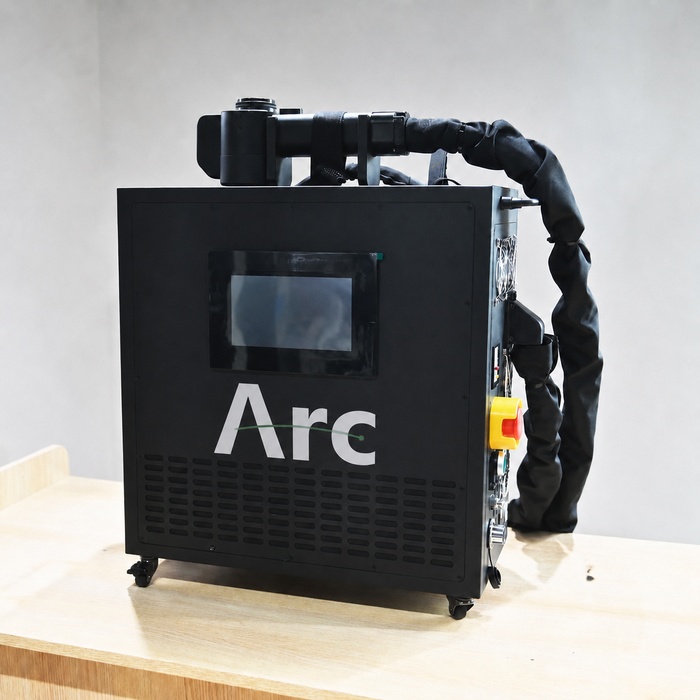
Laser cleaning is a non-abrasive surface preparation method that uses a focused pulsed laser beam to vaporize rust, paint, oil, grease, oxidation, and other contaminants from metal and other surfaces. It removes contamination without chemicals, abrasive media, or secondary waste, leaving the underlying substrate untouched. Because it is precise and non-destructive, laser cleaning is widely used in welding and fabrication, industrial maintenance, fleet restoration, and commercial kitchen equipment cleaning.
Laser cleaning is a non-abrasive surface preparation method that uses a focused pulsed laser beam to remove rust, paint, oil, grease, oxidation, and other contaminants from metal and other surfaces. It works without chemicals, abrasive media, or secondary waste, and leaves the underlying substrate untouched.
Laser cleaning works on a simple principle: different materials absorb laser energy differently.
A pulsed fiber laser emits short, high-energy pulses of light at a specific wavelength (our system operates at 1064nm). When the beam hits a contaminated surface, the contaminant, such as rust, paint, or grease, absorbs the laser energy and vaporizes almost instantly. The underlying metal reflects most of the laser energy, so it stays cool and untouched.
The vaporized contaminant becomes a fine dry residue that is captured by HEPA filtration. There is no liquid runoff, no abrasive media, and no secondary waste to dispose of.
Think of it as a very precise, very fast way to remove only what you want removed, leaving everything else exactly as it was.

Laser cleaning is not the right answer for every job. Being upfront about this builds trust:
For most industrial cleaning jobs, laser cleaning is the cleaner, safer, and often more cost-effective choice. The best method depends on the specific job, and we are happy to advise honestly.
| Method | Chemicals | Abrasive Media | Substrate Damage | Secondary Waste | Best For |
|---|---|---|---|---|---|
| Laser Cleaning | None | None | None | Minimal dry residue | Precision, selective, in-place cleaning |
| Sandblasting | None | Yes | Yes | Spent media + dust | Very large surface areas |
| Chemical Cleaning | Yes | None | Possible | Hazardous waste | Some specific contaminants |
For a detailed breakdown of laser cleaning vs sandblasting on cost, substrate damage, waste, and downtime, see our full comparison.
Yes, when done properly. Laser cleaning uses Class 4 laser equipment, which requires trained operators and proper safety controls. Arc Surface Solutions follows ANSI Z136.1 laser safety standards on every job, with controlled laser areas, certified eyewear, barriers, and HEPA fume extraction for indoor work. Our operators are trained in laser safety and assess every substrate before cleaning begins.
Pre-weld prep and post-weld cleaning for inspection-ready results.
Tooling, molds, dies, and production equipment cleaned in place.
Rust and grease removal from vehicles and heavy machinery.
Carbon and grease removal from cooking and kitchen equipment.
Masonry, heritage surfaces, and graffiti removal.
Surface preparation before inspection, welding, or recoating.
Laser cleaning is a non-abrasive surface preparation method that uses a focused pulsed laser beam to vaporize rust, paint, oil, grease, oxidation, and other contaminants from metal and other surfaces. It removes contaminants without chemicals, abrasive media, or secondary waste, leaving the underlying substrate untouched.
A pulsed fiber laser emits short, high-energy pulses of light. The contaminant absorbs the laser energy and vaporizes, while the underlying metal reflects most of the energy and stays untouched. The vaporized contaminant becomes a fine dry residue captured by HEPA filtration.
Laser cleaning is often better than sandblasting because it produces no abrasive media, no hazardous waste, and no secondary cleanup, and it does not damage the underlying substrate. Sandblasting can be more cost-effective for very large surface areas, so the best choice depends on the job.
No. The laser is calibrated so the contaminant absorbs the energy while the underlying metal remains untouched. This makes laser cleaning safe for delicate surfaces, threads, and machined tolerances.
Laser cleaning removes rust, paint and coatings, oil and grease, oxidation, weld discoloration, graffiti, and other surface contaminants from metal, stone, and composite materials.
Yes. Laser cleaning uses no chemicals, no abrasive media, and produces no hazardous secondary waste. Contaminants vaporize into a minimal dry residue captured by HEPA filtration.
Tell us what you are working with and we will advise honestly on whether laser cleaning is the right method. Send us photos and we will respond within one business day.
Request a Quote